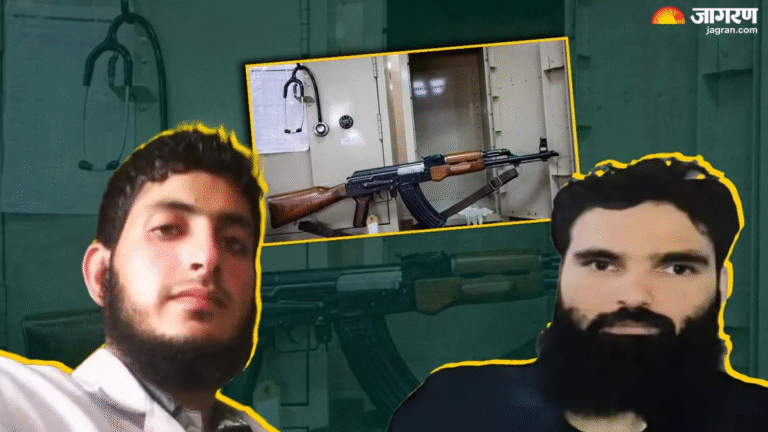
Indian Army confirms killing of Pahalgam terror attack mastermind Suleiman Shah in Operation Mahadev near Srinagar. LeT link suspected.
🚨 High-Value Target Eliminated: 3 Terrorists Killed in Operation Mahadev
In a major counter-terror breakthrough, the Indian Army and Jammu & Kashmir Police have killed three terrorists, including Suleiman Shah, the alleged mastermind of the April 22 Pahalgam attack, during a fierce gunfight in the Lidwas area near Dara, close to Dachigam National Park, on the outskirts of Srinagar.
The anti-terror operation, codenamed Operation Mahadev, was launched on the basis of specific intelligence inputs, military officials confirmed on July 28, 2025.
🗣️ “Three terrorists have been neutralised in an intense firefight. Operation continues,” stated the Chinar Corps on X (formerly Twitter).
💣 The Pahalgam Massacre: A Recap of April 22
The now-deceased Suleiman Shah, also known by his alias Hashim Moosa, had been on the run since orchestrating the April 22 terror attack in Pahalgam, which left 26 people dead, the majority of them innocent tourists.
🧾 Key Facts About the Pahalgam Attack:
- Attackers opened indiscriminate fire on tourist buses and civilians in the Pahalgam region.
- It was one of the deadliest attacks in Kashmir in recent years.
- Shah became the most wanted terrorist in J&K, with a ₹20 lakh bounty placed on his head.
🔍 Who Was Suleiman Shah?
Suleiman Shah is believed to have had links with Pakistan’s military establishment and was an active member of the Lashkar-e-Taiba (LeT) terror group. Intelligence agencies suspect he:
- Was a former operative in the Pakistan Army.
- Had been sheltering in central Kashmir’s Ganderbal district.
- Played a direct role in planning and executing attacks on soft targets, especially civilians.
His neutralization marks a significant win for India’s ongoing campaign to dismantle terror networks with cross-border support.
🎯 Operation Mahadev: A Coordinated Intelligence-Led Strike
The joint operation by the Indian Army and J&K Police was carried out in the high-altitude Lidwas region, making it a logistically challenging mission. The terrain is dense and mountainous, lying adjacent to the eco-sensitive Dachigam National Park, which borders insurgency-prone zones.
🎖️ Tactical Highlights:
- Ground forces were mobilized based on pinpointed intelligence.
- The terrorists were cornered and engaged in a heavy exchange of fire.
- Bodies of all three terrorists were recovered, though official identification is pending.
IGP Vidhi Kumar Birdi spoke to the media, confirming:
“It is a prolonged operation in the high reaches. As per internal reports, three bodies are being observed and seem to be neutralised.”
The operation remains ongoing, with search and combing operations being conducted to rule out the presence of any additional militants or hideouts.
🇮🇳 Strategic Significance: A Blow to Lashkar-e-Taiba
🧠 Why This Matters
The elimination of Shah not only delivers justice for the Pahalgam victims but also deals a major strategic blow to Lashkar-e-Taiba, which continues to operate with alleged support from across the border.
The attack he led in April was meant to:
- Undermine tourism and economic revival in Kashmir.
- Spread fear among civilians and erode trust in state security.
- Send a symbolic message ahead of regional festivals and elections.
By taking out Shah, Indian forces have disrupted a potential chain of future attacks.
🌍 Broader Implications: Is Cross-Border Terror on the Rise Again?
This encounter comes at a time when India-Pakistan relations are strained, and the Line of Control (LoC) has witnessed increased infiltration attempts in recent months.
Security experts suggest that terror outfits like LeT are attempting to:
- Re-establish sleeper cells in North and Central Kashmir.
- Exploit ecologically protected areas as safe havens due to restricted military movement.
- Use local recruits trained abroad to carry out high-impact strikes.
🛡️ What’s Next? Security Forces Remain on High Alert
With the Amarnath Yatra and Independence Day approaching, security agencies are maintaining high alert across the Kashmir Valley. Mobile checkpoints, aerial surveillance, and intelligence-sharing mechanisms have been ramped up.
The Ministry of Home Affairs is likely to:
- Reward the forces involved in Operation Mahadev.
- Issue a fresh security advisory for high-footfall public areas.
- Push for more collaborative intelligence efforts between central and state forces.
🕊️ Public Sentiment: Relief and Respect
The neutralization of Shah has brought a sense of relief to families of the April attack victims, many of whom had been demanding swift action. Social media was filled with praise for the security forces, with hashtags like #OperationMahadev and #JusticeForPahalgam trending nationwide.
🙏 “This is a tribute to the innocent lives lost. Our soldiers have once again shown courage and commitment,” wrote a user on X.
✍️ Conclusion: A Clear Message to Terror Networks
Operation Mahadev is more than just a tactical success — it’s a resounding message to terror groups operating in Kashmir and their alleged backers across the border. The Indian Army and police have demonstrated that those who attempt to destabilize the region will be pursued and brought to justice, no matter how long it takes or where they hide.
As the situation evolves, the focus remains on ensuring that peace, tourism, and normalcy return to Kashmir, without the looming shadow of fear.
📰 For continuous updates on Kashmir security, geopolitics, and counter-terrorism operations, subscribe to our newsletter and follow us on social media.