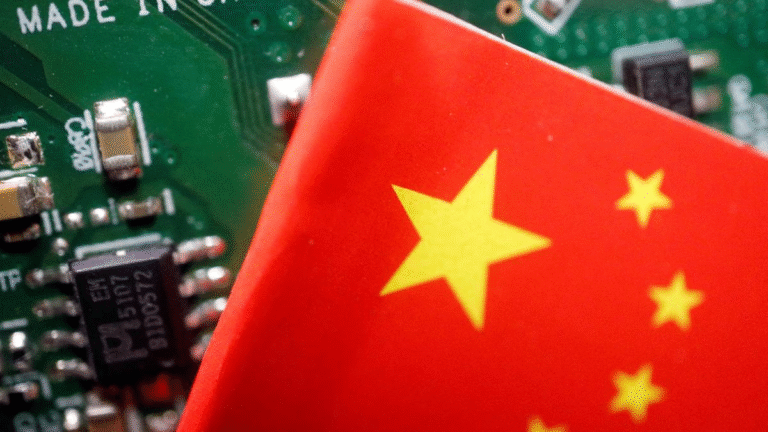
Trump’s AI blueprint includes export rules requiring AI chip location verification to prevent advanced chips reaching hostile nations.
🧠 What Did Trump’s AI Blueprint Recommend?
On July 23, the Trump administration released its sweeping AI Action Plan, featuring over 90 initiatives to boost AI exports, ease environmental rules for data centers, and most notably, implement chip location verification to prevent advanced AI chips from being diverted to adversaries Reuters+15Reuters+15TrendForce+15.
Key elements:
- Export controls requiring chips from NVIDIA and AMD to report their location and disable if moved to restricted countries.
- Commitment to deny advanced chip access to foreign adversaries.
- Extension of export boom to allied nations, aiming to maintain the U.S. AI edge Financial Times+15Reuters+15Reuters+15.
🇺🇸 Bipartisan Backing: The Chip Security Act
This proposal closely aligns with the bipartisan Chip Security Act, introduced by Representative Bill Foster (D–IL) and Senator Tom Cotton (R–AR) TrendForce+6Reuters+6TimesLIVE+6.
- Bill Foster noted the overlap and expressed optimism: “I was encouraged … aligns closely with our bipartisan Chip Security Act.” Reuters+15Reuters+15TimesLIVE+15
- A spokesperson for Senator Cotton added that verification helps “keep advanced American technology out of the hands of Communist China.” Reuters+1TimesLIVE+1
🔍 But How Will It Work? Challenges Ahead
Details are still vague:
- No clarity on technology to enforce real-time or firmware-based tracking.
- Costs, privacy, and logistics remain undefined.
- Firms and allies have yet to see guidelines on global coordination. Reuters+8Reuters+8Financial Times+8Reuters
This suggests that implementation could require months, possibly through Commerce or State Department rules.
⚖️ Strategic Shifts vs. Trade-Offs
The blueprint represents a pivot from previous export restraint policies under President Biden (“high fence” approach):
- It opens exports to allies and adopts deregulation to speed infrastructure growth.
- It retains hard restrictions for hostile nations like China.
- It introduces novel enforcement controls through chip tracking technology. Vox+15Reuters+15Reuters+15Financial Times+11Reuters+11Reuters+11Reuters+1U.S. News+1
This marks a dual strategy: free trade for allies, tight defense against adversaries.
🌐 Why It Matters Globally
- Emerging tech regimes: Tracking chips post-sale reinforces government control over advanced semiconductors.
- The strategy sets a benchmark for global national security standards in chip exports.
- Firms like NVIDIA, AMD, and cloud giants may benefit commercially—but bear compliance risks.
✅ Final Take and Next Steps
Trump’s AI blueprint lays a foundation melding AI trade with national security. The chip verification proposal aims to close smuggling loopholes and strengthen control over advanced AI technology.
Next critical steps:
- Rulemaking by U.S. agencies defining tracking requirements,
- Industry compliance testing and integration,
- Global alignment on tracking standards with allies.
This signals an evolving U.S. policy in which technological dominance, security, and export strategy converge.