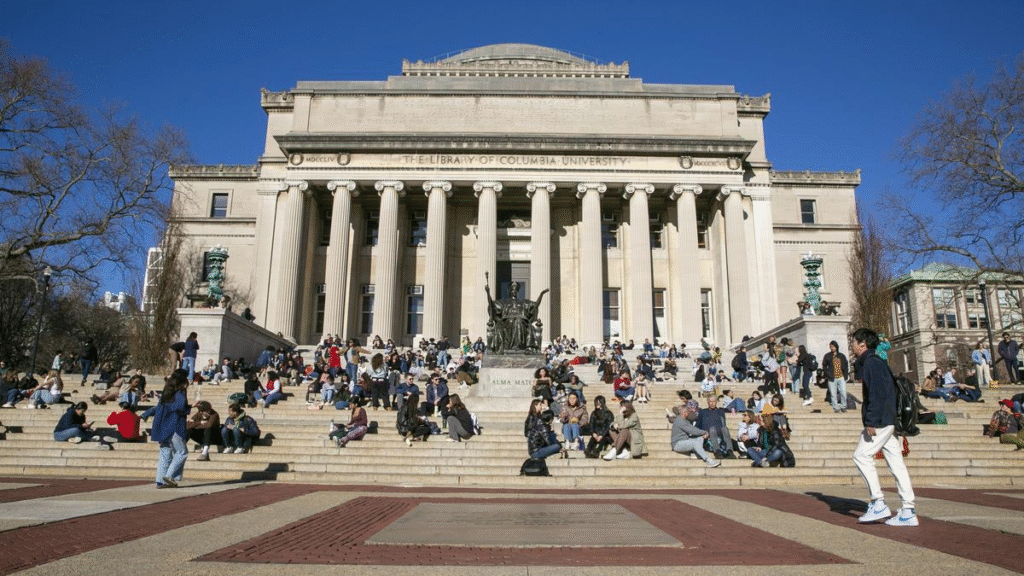
Columbia agrees to pay $221M and roll back DEI policies in a #historic agreement with Trump admin to regain federal research funding.
🔍 What’s in the Deal? Columbia Pays $221 Million
Columbia University reached a $221 million settlement with President Trump’s administration to resolve a months-long clash over civil rights and antisemitism allegations. Under the agreement:
- A $200 million civil penalty to the U.S. government over three years
- An additional $21 million to settle claims by Jewish faculty and staff
- Restoration of most of the $400 million in previously frozen federal research funding Yahoo News UK+15The Indian Express+15The Times of India+15
In exchange, Columbia has pledged sweeping institutional changes spanning DEI policy rollback, disciplinary reforms, and antisemitism definitions AP News.
🎙️ Trump’s Response: Calling It “Historic”
President Trump, posting on Truth Social, described the agreement as “historic,” lauding the rollback of DEI programs and return to merit-based admissions. He added that similar agreements are being pursued with other universities The Indian Express.
Trump also praised Education Secretary Linda McMahon and Columbia’s leadership and signaled that other institutions could soon face similar scrutiny The Wall Street Journal+14The Indian Express+14New York Post+14.
🔄 Key Policies & Commitments
Under the settlement, Columbia agreed to implement major changes:
- Adoption of a federal definition of antisemitism linked to anti-Zionism
- Elimination of DEI initiatives deemed unlawful
- Overhaul of student disciplinary processes
- Structural governance shifts, increasing administrative oversight
- Restrictions on protest gear (e.g., face coverings) and visa-holder tracking
- Reporting international students’ disciplinary actions to federal authorities The Wall Street Journal+15Reuters+15Al Jazeera+15AP NewsWikipedia+4WCIV+4AP News+4The Washington Post+1Wikipedia+1Wikipedia
Columbia executive insisted that admissions and academic autonomy would remain intact Financial Times.
⚖️ Background Context
The settlement follows the Trump administration’s cancellation of $400 million in federal grants in March 2025, citing Columbia’s alleged failure to act against antisemitism during pro-Palestinian protests Fox News+15The Guardian+15Reuters+15.
This move formed part of a broader federal strategy involving the Joint Task Force to Combat Anti-Semitism, targeting elite universities like Harvard, Brown, Cornell, Northwestern, and Princeton with funding freezes Higher Ed Dive+3Wikipedia+3The Washington Post+3.
📝 Analysis & Opinions
🛡️ Policy Shift & Political Leverage
- The deal underscores the administration’s move to demand compliance from universities in return for federal resources WCIV+10The Indian Express+10The Times of India+10.
- Critics argue it blurs the line between civil rights enforcement and political influence, with concerns about potential lawsuits and academic freedom erosion Financial TimesThe Wall Street JournalThe Washington PostGothamistWikipedia.
💰 Worst-Case Financial Outlook for Columbia
- The $221 M payment to regain $400 M in funding appears a steep but arguably calculated trade.
- Columbia predicts restoring “billions” in funding from agencies like NIH and HHS The Times of India+13Reuters+13Yahoo+13Fox News+2Gothamist+2Financial Times+2.
🏛️ Role Model or Warning Bell?
- Universities like Harvard are now navigating similar pressure: Harvard has chosen legal resistance, while others may consider preemptive compliance WikipediaThe Wall Street JournalThe Times of IndiaFinancial Times.
- The bigger issue: Will these institutional adjustments define academic norms or stifle plurality and student rights?
🔮 Broader Implications
- This case may set a template for future agreements between elite universities and the federal government.
- It reflects ongoing tensions between federal oversight, academic autonomy, and ideological divides.
- Enforcement of policy changes will be monitored via an external overseer—a notable shift in federal-campus relations The Washington Post+3The Guardian+3The Wall Street Journal+3Higher Ed Dive+2Financial Times+2nzherald.co.nz+2The Chronicle of Higher Education+2Gothamist+2Financial Times+2.
✅ Final Take
Columbia’s agreement with Trump sets a powerful precedent: federal funding in exchange for institutional reform. Advocates see it as a victory for minority protection and accountability; critics see it as a politicized clampdown threatening academic freedom. As other universities wrestle with similar choices—litigation or compliance—the trajectory of U.S. higher education may shift for years to come.