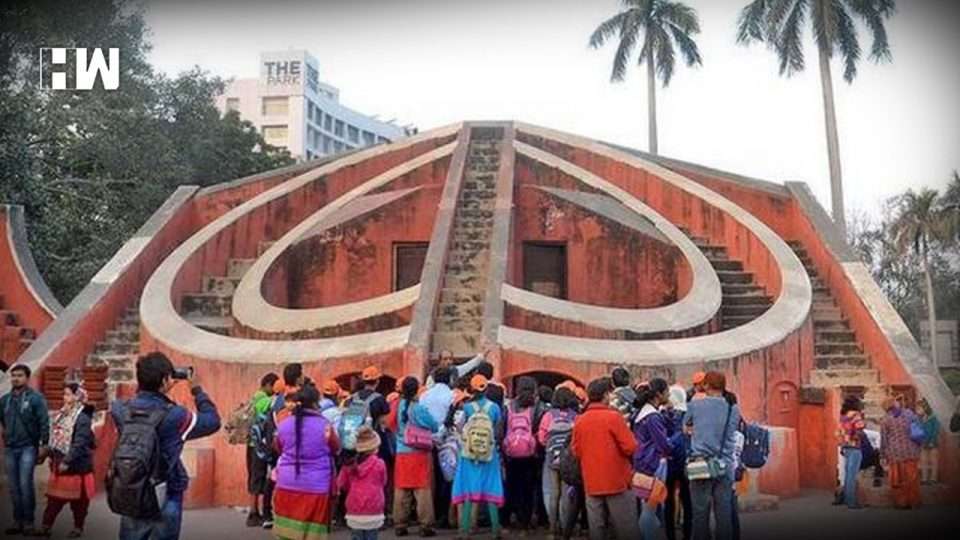
**NEW DELHI** — In a sweeping administrative overhaul that has instantly inflamed tensions between civil society groups and municipal authorities, the Delhi Police have officially denotified the historic Jantar Mantar area as a designated site for public demonstrations, political rallies, and anti-Chief Election Commissioner (CEC) protests. Citing mounting logistical gridlocks, recurring traffic paralysis in the heart of the national capital, and escalating security vulnerabilities, law enforcement officials have dismantled the decades-long status of the iconic protest avenue. To accommodate civic expression moving forward, the administration has formally proposed three alternative locations across the city's periphery, though the decision has already triggered fierce resistance from political activists and freedom-of-speech advocates.
The sudden revocation of Jantar Mantar’s protest-site status marks a dramatic turning point in the storied history of India’s capital as a crucible for public dissent. For generations, the venue served as the epicenter of Indian democratic agitation, tracing its modern prominence from the historic anti-corruption crusades and labor strikes of the late 20th century to the monumental anti-rape and anti-CAA movements of the 2010s. Originally permitted as a peaceful outlet situated near the seat of parliamentary power, Jantar Mantar became synonymous with citizen-led accountability. However, as urbanization accelerated and vehicular congestion choked the New Delhi municipal zone, successive administrative reviews flagged the location as increasingly untenable for large-scale gatherings, culminating in this week's definitive closure.
Under the newly instituted administrative framework, the Delhi Police have outlined strict parameters for future demonstrations, channeling all prospective agitators toward three newly designated suburban zones: the sprawling grounds near the Burari open-air theatre in North Delhi, designated spaces within the Dwarka sub-city in Southwest Delhi, and an isolated plot near the Millennium Park grounds along the eastern Yamuna riverbed. Security analysts note that these alternative sites are situated miles away from key government ministries, the Supreme Court, and Parliament House—a geographic shift that critics argue is deliberately engineered to muffle the voices of dissidents by isolating them far from the corridors of ultimate political power.
Reacting sharply to the sudden crackdown and the ongoing anti-CEC mobilization, opposition figures and civil rights attorneys have lambasted the police directive as an unconstitutional assault on democratic freedoms. "By banishing protesters to the outer margins of the metropolis, the administration is effectively criminalizing dissent and shielding constitutional authorities from public scrutiny," remarked a prominent human rights advocate representing the aggrieved coalition. Conversely, senior law enforcement officials defended the measure as a vital balancing act between the fundamental right to assemble and the daily rights of millions of commuters. "Our primary obligation is to ensure public safety, maintain unimpeded emergency routes, and prevent urban paralysis while still preserving lawful avenues for civic expression," a senior Delhi Police spokesperson stated during an emergency press briefing.
As the dust settles on the controversial policy shift, the immediate impact is already reverberating through the legal and political landscapes of New Delhi. Opposition parties and activist networks are reportedly preparing immediate legal challenges in the High Court, seeking an urgent injunction against the denotification before the next wave of anti-CEC rallies commences. Meanwhile, municipal authorities are moving swiftly to install enhanced barricading and surveillance infrastructure around the perimeter of Jantar Mantar to deter unauthorized assemblies, setting the stage for a high-stakes legal and societal showdown over the boundaries of public protest in the world's largest democracy.
Source: The Hindu • Read Original Reporting