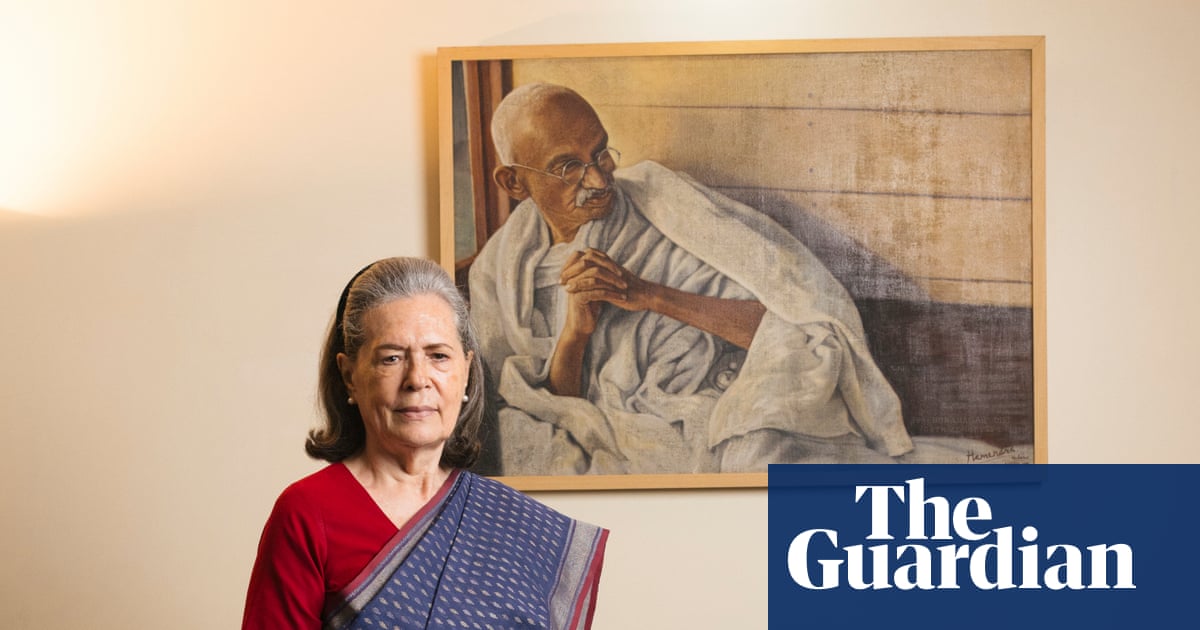
Veteran Congress party leader Sonia Gandhi has released her much-anticipated political memoir, *Belonging*, offering a remarkably candid and reflective account of her extraordinary journey from a small town in Italy to the apex of political influence in India. Published today, the book provides a sweeping, ringside view of six decades of the nation’s political evolution, touching upon the private grief of losing her first child, the harrowing discovery of hidden grenades in her home following the 1984 Operation Blue Star, and the violent assassinations of both her mother-in-law, Indira Gandhi, in 1984 and her husband, Rajiv Gandhi, in 1991. The memoir arrives at a critical juncture in contemporary Indian politics, vividly capturing the seismic shift from the Congress-dominated secular republic she first encountered in 1968 to the modern era of Hindu nationalism under Prime Minister Narendra Modi.
Tracing the complex historical backdrop of the nation, Gandhi’s narrative openly revisits several darker chapters that have heavily impacted both her family and the Congress organization. Among these is the 21-month imposition of the Emergency by Indira Gandhi in June 1975, a tumultuous period defined by the suspension of civil liberties, the imprisonment of political opponents, and the strict gagging of the press. According to the author, this draconian era not only induced widespread fear and dismay across the entire country but also generated a profound and painful rift within the Gandhi family itself, underscoring the heavy personal tolls exacted by political power.
At the core of the memoir’s contemporary critique is a sharp focus on the deep partisan polarization defining modern Indian governance. Gandhi reveals that she has experienced “practically no real contact” with Prime Minister Modi over the 12 years he has led the nation, noting that when their paths cross in confined spaces like the speaker’s small chamber, Modi routinely avoids eye contact, occasionally offering only brief inquiries regarding her health following hospital stays. Contrastingly, she recalls an era when cross-aisle political rivals maintained mutual cordiality, highlighting how she immediately telephoned then-BJP prime minister AB Vajpayee to check on his safety following the 2001 parliament terror attack. Furthermore, Gandhi critiques an increasingly authoritarian political style designed to “belittle and torment” adversaries, drawing direct parallels to the persistent ridicule faced by her son, Rahul Gandhi, and global political trends marked by personal insults and aggressive rhetoric.
The publication of *Belonging* has also cast a sharp spotlight on broader institutional pressures, particularly the shrinking margins for free expression and the evolving dynamics between political leaders and the press. Gandhi sharply contrasts modern political transparency with earlier decades when prime ministers regularly faced direct journalistic scrutiny. In stark contrast, she points out that Modi has not addressed a single independent press conference throughout his 12 years in power, largely bypassing open forums in favor of one-on-one interviews with sympathetic broadcasters. This climate of apprehension surrounding critical discourse is further underscored by the book's own turbulent publishing history. Originally slated for release by Penguin Random House India, the project was dropped in August after Gandhi declined specific suggested edits—though Penguin disputed her account, arguing it “does not accurately reflect the circumstances.” The memoir was ultimately released in the US by Alfred A Knopf and distributed in India by HarperCollins, arriving amid heightened industry sensitivity following Penguin’s earlier cancellation of graphic journalist Joe Sacco’s *The Once and Future Riot*.
As *Belonging* reaches readers globally, its release serves as a poignant reminder of the profound isolation frequently experienced by female leaders navigating a historically male-dominated political arena. Recalling a 2012 conversation with Hillary Clinton regarding the unique burdens carried by women in power, Gandhi reflects on the profound loneliness and besieged mindset that plagued Indira Gandhi, particularly in the lead-up to the Emergency. By laying bare her own reluctance and subsequent sense of duty in assuming leadership of the Congress party, Gandhi's memoir cements its place as a vital historical document, illuminating the personal sacrifices, institutional shifts, and partisan divides that continue to shape the destiny of the world's largest democracy.
Source: The Guardian • Read Original Reporting
